


.svg)

Make AI Roleplay scenario building faster and data management more accessible.
Streamline authoring with Environment duplication, tailor performance metrics to your internal frameworks, and extract raw session reporting through our new public endpoints.


The latest release of Rehearsal AI Roleplay introduces several updates. Authors can duplicate existing Roleplay environments to rapidly build out variants, customize performance metric definitions across 14 languages to match internal development rubrics, and save draft content without category constraints.
For engineering teams, a new public session-reporting API endpoint enables direct, automated data synchronization with your company's BI dashboards and learning management tools.
New Features:
Fully Adjustable Performance Metrics:
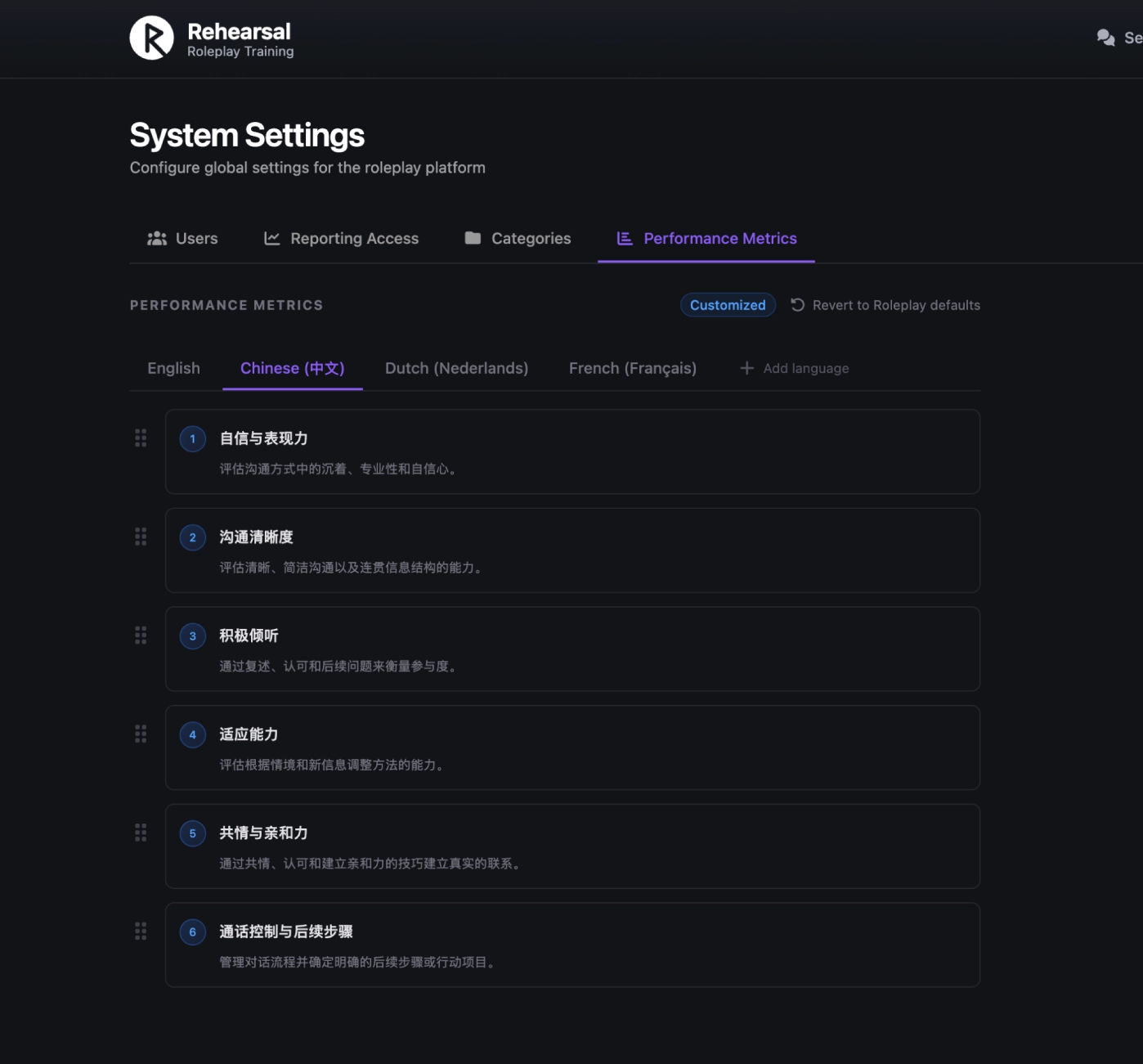
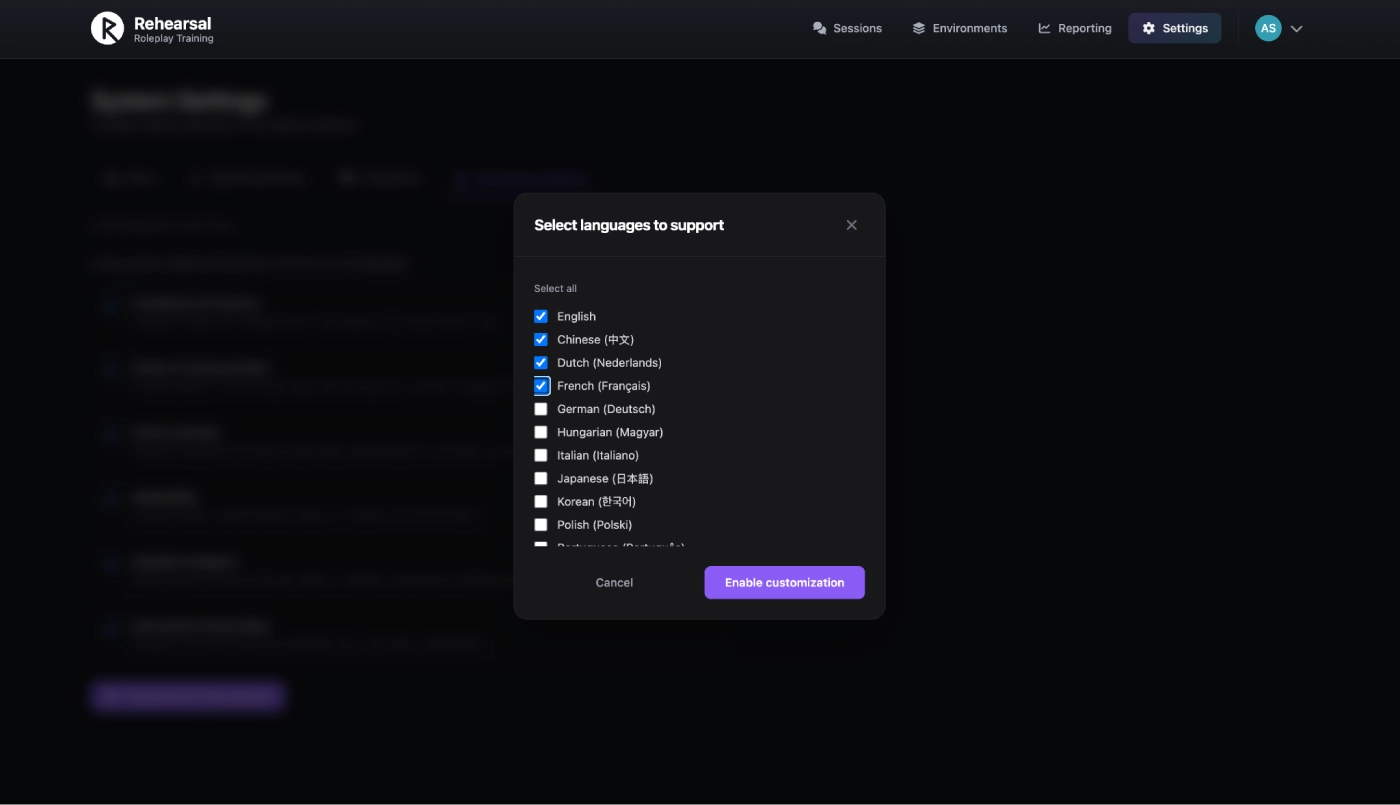
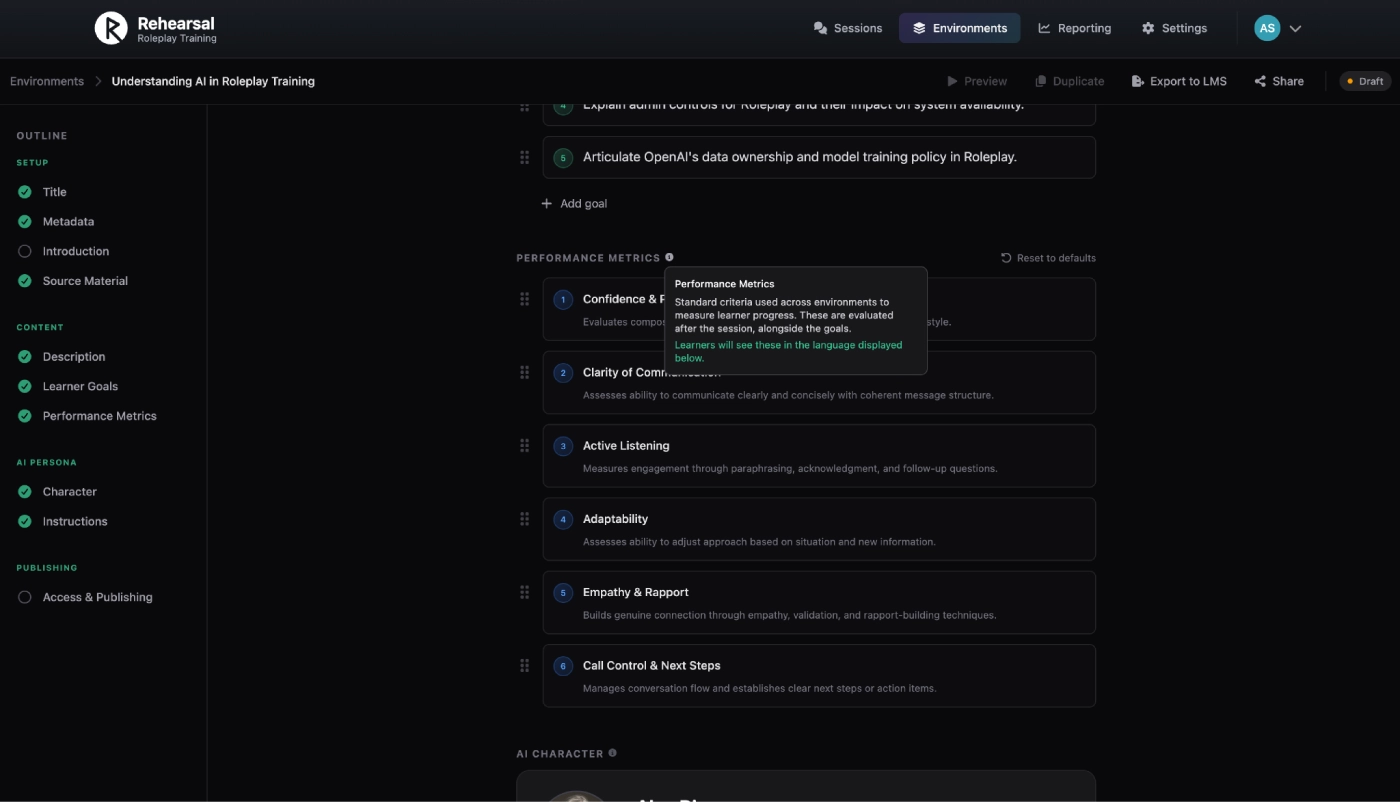
The performance criteria evaluated at the conclusion of Roleplay sessions are adjustable at both account and environment levels. System admins can modify default metric descriptions across 14 native languages inside system settings. Authors can add up to six distinct metrics, edit criteria text inline, and drag rows to reorder them within unpublished environments. The AI uses these specifications to generate performance scores and secondary feedback criteria.
Environment Duplication:
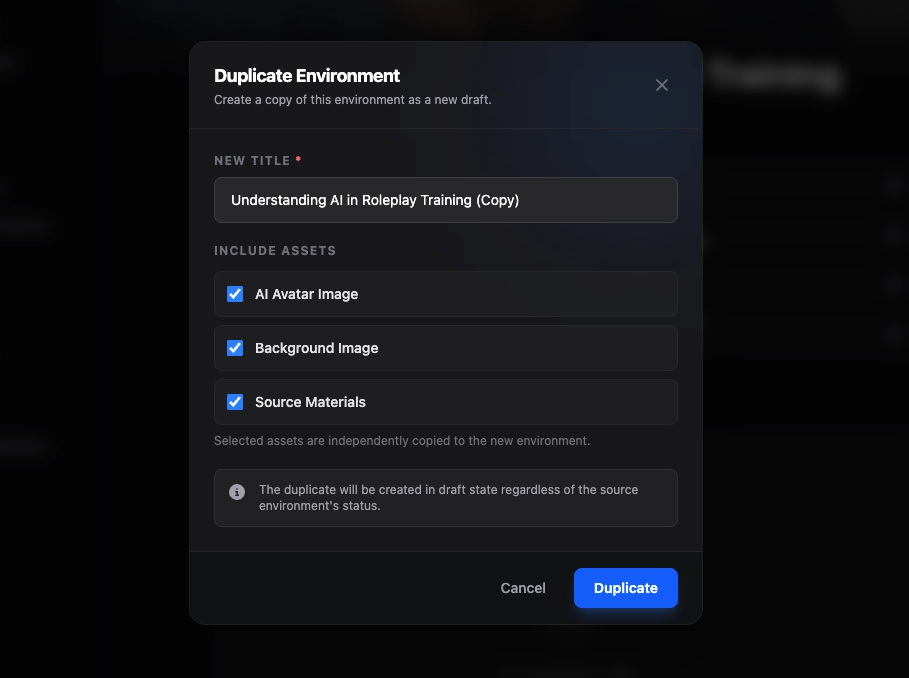
Authors can copy an entire Roleplay environment directly from the interface layout. The duplication process creates a separate draft copy containing all primary descriptions, learner goals, persona instructions, and communication profiles. An optional checklist lets you choose which media elements to copy independently, including AI avatar designs, background graphics, intro videos, and source material.
Original files remain unaffected, including session data, analytics, share links, and assignments tied to the source environment are intentionally not copied — the duplicate is a clean starting point. Duplicating a published environment never modifies or republishes the source.
Flexible Inline Categories
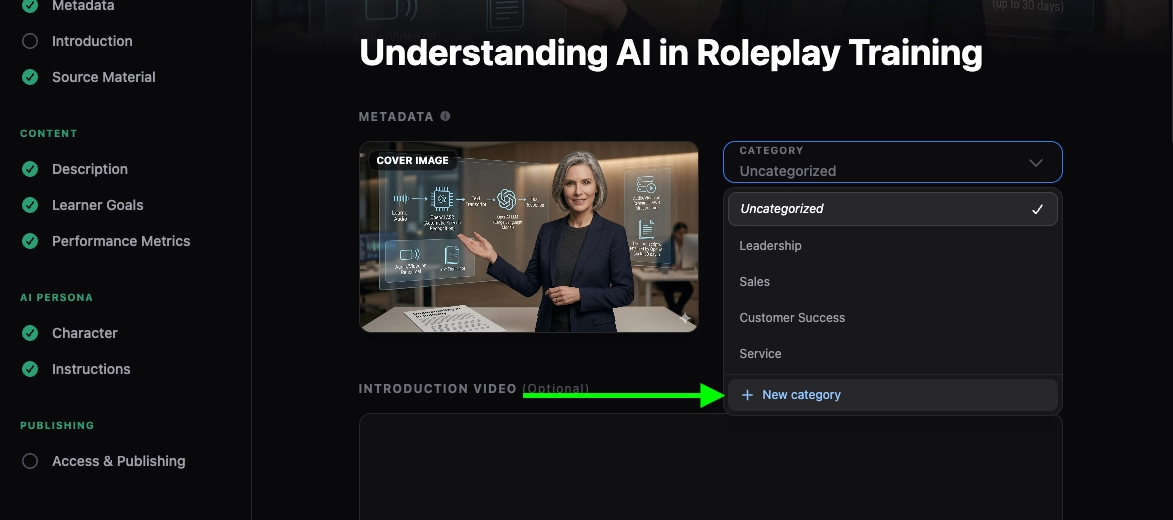
Assigning a category is optional when saving a Roleplay environment. Scenarios saved without an explicit organizational bucket automatically display as uncategorized across the editor panel, inventory lists, and tracking catalogs. Users can filter by uncategorized content to find unassigned assets. Authors can also create account-wide structural categories directly from the editor dropdown menu while editing an environment.
Public API
Enterprise users can fetch session data through a public reporting API endpoint. A single secure request retrieves complete session payloads, including start times, completions, precise learner identifiers, per-goal results, numeric scores, and full AI feedback paragraphs. Technical documentation and setup guides are hosted publicly on GitHub pages to assist integration with external business intelligence systems and learning platforms.
Published Documentation
- Self-serve reference docs: Public documentation covers the endpoint path, parameters (filters, ordering, paging), authentication, the full session response shape, and error responses, with worked request/response examples — enough for a customer engineer to build against without a bespoke spec. Roleplay API docs: rehearsalvrp.github.io/roleplay-public-api-docs
- PowerBI guide: Step-by-step guide for consuming the Sessions endpoint and building a per-learner, per-attempt, per-goal report in PowerBI: Power BI guide. It is the first entry in a new Guides section that links back to the API reference.
- Self-hosted on GitHub Pages: Both the Roleplay and Rehearsal public API docs were migrated off SwaggerHub to self-hosted GitHub Pages, with an accuracy pass aligning documented fields and parameters with the shipped endpoint. Rehearsal API docs: rehearsalvrp.github.io/rehearsal-public-api-docs
- Knowledge base entry: A KB article links out to all of the above — see Public API Documentation.
Log in to your admin panel to access the technical documentation and start using these features.
Connect


